Choosing reliable commercial LED strip lights suppliers worldwide requires more than comparing prices or browsing polished product catalogs. Commercial projects demand stable brightness, accurate color, efficient heat control, and dependable delivery. A strip that looks impressive in a showroom may perform differently inside a warm ceiling channel or under continuous operation.
This overview examines established suppliers through practical purchasing criteria. These include LED quality, voltage stability, color rendering, cutting accuracy, IP protection, adhesive performance, and available aluminum profiles. Certifications and testing records also matter. Documents such as LM-80, TM-21, CE, RoHS, and UL-related approvals can support technical confidence, but buyers should verify their scope and validity. Labels alone are not enough.
Supplier experience becomes clearer through samples, installation guidance, response times, and warranty handling. A dependable manufacturer should explain lumen output, power consumption, operating temperature, bin consistency, and recommended drivers. It should also provide clear lead times for large orders. Small details matter. One missed specification can affect an entire retail display.
This guide does not treat every global supplier as equally suitable. Some companies excel in custom manufacturing, while others offer stronger distribution networks or faster regional support. That difference is easy to overlook. Real projects may also reveal weaknesses that brochures hide, including uneven color batches or delayed replacement parts. Therefore, the following supplier overview balances technical evidence, market reputation, service capability, and practical project considerations. Buyers should still request samples and conduct independent testing before making a final decision.
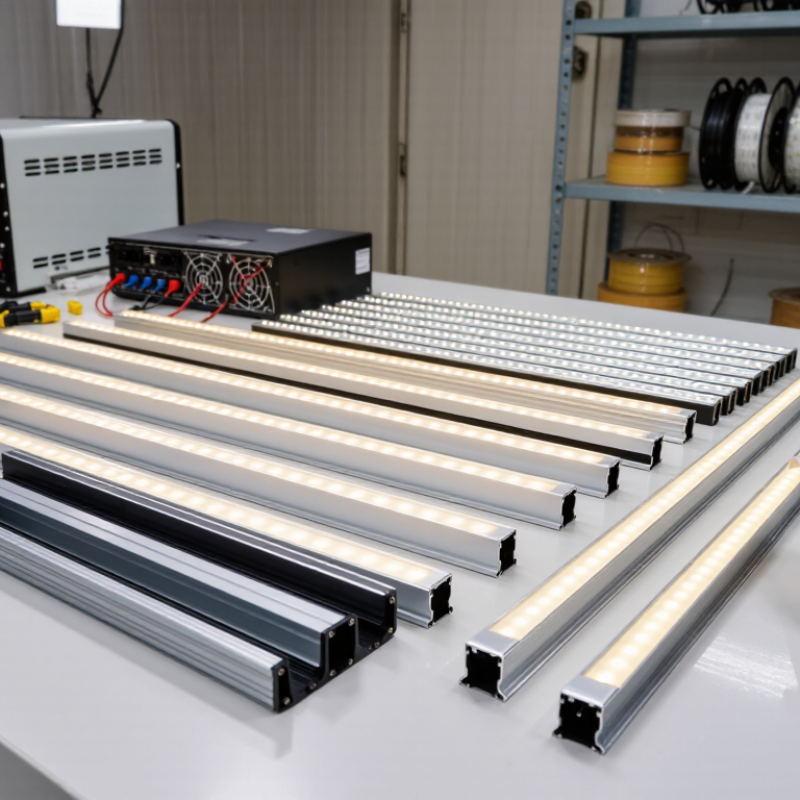
Commercial LED strip lights are flexible circuit boards fitted with closely spaced LEDs. They provide continuous, controllable illumination in demanding business environments. Unlike decorative strips, commercial models often support longer runs, higher brightness, and better thermal control. A complete system usually includes a compatible driver, aluminum profile, diffuser, and mounting method.
Key features include adjustable color temperature, high color rendering, dimming compatibility, and protection against dust or moisture. IP ratings matter in kitchens, bathrooms, outdoor signage, and semi-exposed areas. Aluminum channels help release heat and create a cleaner light line.
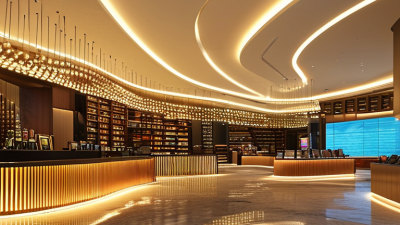
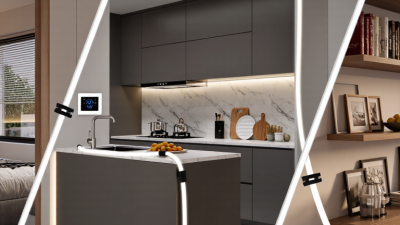
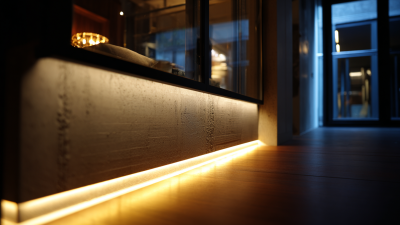
In retail stores, strips highlight shelves and product displays. Hotels use them under counters, along corridors, and inside architectural coves.
Offices often apply them to task zones and reception features. Suppliers should provide photometric data, testing documents, warranty terms, and clear installation guidance. Claims without measurable data deserve careful review.
Tips: Match voltage, wattage, driver capacity, and dimming protocols before ordering. Leave headroom in the power supply. Check the strip’s actual brightness after installation, not only its laboratory rating. A brighter strip is not always better. Excessive output can create glare, heat, and uncomfortable reflections. Even experienced installers can overlook voltage drop on long runs. Test a sample section first, especially when color consistency matters.
Choosing a global LED strip supplier requires more than comparing price per metre. The International Energy Agency’s Energy Efficiency 2024 report states that LEDs represented roughly half of global lighting sales in 2022. That scale makes verification essential. Request test data for finished strips, not only individual LED chips. Compare efficacy, colour rendering, voltage stability, and power consumption under real operating conditions. A kitchen installation may need CRI 90 or higher, while retail displays may require tighter colour consistency. Small differences become visible across a ten-metre shelf.
Reliability starts with thermal design. Ask for LM-80 and TM-21 documents, solder-pad specifications, and temperature measurements at the strip’s hottest point. The U.S. Department of Energy’s 2023 Solid-State Lighting R&D Plan continues to track efficacy targets above 200 lumens per watt for advanced lighting systems. This is useful context, but it is not proof of a supplier’s product quality. Check IP ratings against IEC 60529, electrical safety against IEC 60598-1, and photobiological safety against IEC 62471. An IP65 sleeve may resist splashes, yet fail where condensation remains trapped.
Supply capability also matters. Review batch traceability, component-change notices, sample approval procedures, and warranty exclusions. Ask how quickly replacements arrive in your region. A “50,000-hour” claim is weak without ambient-temperature and lumen-maintenance conditions. I would also test three production samples, not one. Datasheets can look perfect. Field performance is less tidy. Pricing, certification, and delivery records should be compared together, because a cheap strip can become expensive after colour shifts, adhesive failure, or repeated installation work.
The chart presents a practical procurement-weighting model for comparing global commercial LED strip light suppliers. Higher percentages indicate greater importance when evaluating product quality, compliance, supply reliability, and total cost.
These criteria reflect common commercial sourcing priorities, including light performance, safety certification, durability, customization capability, logistics reliability, technical support, and landed cost. The percentages are normalized to a total evaluation weight of 100%.
Top Commercial LED Strip Lights Suppliers Worldwide
Commercial LED strip light suppliers vary by market region, installation standards, and project expectations. North American suppliers often focus on retail, hospitality, and warehouse lighting. They typically provide strong documentation, warranty terms, and detailed photometric data. European suppliers commonly emphasize energy efficiency, low-glare designs, and strict product testing. Their solutions suit offices, museums, hotels, and public interiors.
Asia-Pacific suppliers often offer broad production capacity and flexible customization. They may support unusual lengths, higher-density LEDs, or tailored color temperatures. However, product consistency can differ between factories, so sample testing matters. Suppliers serving the Middle East and Africa usually prioritize heat resistance, dust protection, and reliable shipping. Latin American suppliers often understand local voltage conditions and practical installation challenges. Regional experience is valuable, but it is not always enough.
Tips: Request samples before ordering. Test brightness after several operating hours. Confirm waterproof ratings, connector quality, and adhesive performance. Ask for independent test reports and clear warranty coverage. A supplier should explain bin consistency, color rendering, dimming compatibility, and thermal management in plain language. Do not judge quality by price alone. I have seen attractive specifications fail during installation because aluminum channels were too shallow. That detail is easy to miss. A reliable supplier welcomes technical questions and admits product limitations.
Regional supplier landscape based on commonly specified commercial requirements, applicable standards, product configurations, and procurement criteria. Values shown are typical industry ranges rather than market-share rankings.
| Market Region | Most Common Commercial Applications | Preferred LED Strip Configurations | Typical Power & Voltage | Common CCT & CRI Requirements | Environmental Protection | Key Compliance Expectations | Supplier Evaluation Priorities |
|---|---|---|---|---|---|---|---|
| North America | Retail shelving, hospitality interiors, offices, restaurants, architectural coves, signage, and refrigerated display lighting. | Dimmable High-density Tunable white Addressable options | 12 VDC and 24 VDC are common; commercial projects frequently specify approximately 4.8–19.2 W/m, with higher-output products available for architectural applications. | 2700–4000 K for hospitality and residential-style interiors; 3500–5000 K for offices and retail. CRI 80+ is common, while CRI 90+ is often requested for merchandise and food presentation. | IP20 for dry interiors; IP65 or IP67 for areas exposed to dust, splashing, or frequent cleaning. | UL or equivalent electrical safety listing, RoHS compliance, electromagnetic compatibility documentation, and certified power supplies where required by the project. | Electrical listing, thermal management, lumen maintenance, warranty terms, photometric files, reliable dimming compatibility, and local technical support. |
| Europe | Commercial interiors, museums, hotels, retail displays, public buildings, offices, transport facilities, and energy-efficient refurbishment projects. | 24 VDC Low-glare High-CRI Cut-to-length | 24 VDC is widely preferred for longer commercial runs; typical installed strip power is approximately 4.8–14.4 W/m, depending on brightness and application. | 2700–4000 K for hospitality and heritage environments; 3000–4000 K for offices and retail. CRI 80+ is standard in many projects, with CRI 90+ used where color fidelity is important. | IP20 for indoor architectural use; IP65–IP68 for damp, wet, outdoor, or cleanable installations. | CE marking, RoHS, REACH-related material documentation, EMC compliance, photobiological safety assessment, and applicable energy-performance documentation. | Documentation quality, energy efficiency, color consistency, replaceable components, circularity information, warranty coverage, and compatibility with DALI or 1–10 V control systems. |
| Asia-Pacific | Hotels, shopping centers, residential towers, retail stores, entertainment venues, offices, façade details, and large-scale fit-out projects. | 24 VDC High-output RGB/RGBW Flexible profiles | 12 VDC and 24 VDC are common; approximately 4.8–24 W/m is frequently available, with selection determined by brightness, density, and heat dissipation. | 2700–6500 K for white-light products; RGB and RGBW are common in entertainment and decorative projects. CRI 80+ is typical, with CRI 90+ specified for premium retail and hospitality. | IP20 for dry spaces; IP65, IP67, and IP68 for humid climates, exterior details, poolsides, and wash-down areas. | Market-specific safety marks, EMC requirements, RoHS or equivalent substance restrictions, ingress-protection test reports, and power-supply approvals. | Production capacity, batch consistency, customization capability, lead time, thermal design, waterproofing quality, controller compatibility, and export documentation. |
| Middle East | Hotels, shopping malls, luxury retail, restaurants, landscape features, façade accents, airports, and large public developments. | High-temperature rated IP67/IP68 Aluminum-channel systems RGBW | 24 VDC is commonly selected for commercial reliability; approximately 9.6–19.2 W/m is typical for accent and cove lighting, subject to thermal conditions. | 2700–3500 K for hospitality and luxury interiors; 3000–4000 K for general commercial spaces. CRI 80+ is common, while CRI 90+ is preferred for premium visual merchandising. | IP20 indoors; IP65–IP68 outdoors or in dusty, humid, and high-cleaning environments. UV-resistant encapsulation and heat-resistant materials may be required. | Project-specific electrical approvals, IEC-based safety documentation, EMC compliance, ingress-protection reports, and certifications accepted by the local authority or consultant. | Ambient-temperature performance, heat dissipation, UV resistance, waterproofing, long operating life, replacement planning, and availability of approved drivers and controls. |
| Latin America | Retail stores, supermarkets, hotels, restaurants, offices, residential-commercial developments, signage, and retrofit projects. | 24 VDC Retrofit-friendly Dimmable IP-rated options | 12 VDC and 24 VDC are widely used; approximately 4.8–14.4 W/m is common for indoor projects, with higher-output products for display and architectural lighting. | 2700–4000 K for hospitality and retail; 4000–6500 K for offices, service areas, and some industrial applications. CRI 80+ is generally specified. | IP20 for standard interiors; IP65 or IP67 for kitchens, washrooms, covered outdoor areas, and humid installations. | National electrical safety requirements, applicable IEC-based testing, EMC documentation, RoHS declarations, and import or customs documentation. | Voltage stability, availability of replacement reels, driver compatibility, total installed cost, local distribution, warranty response, and installation guidance. |
| Africa | Retail, hospitality, offices, public facilities, solar-assisted installations, signage, and infrastructure projects requiring efficient low-voltage lighting. | 24 VDC Energy-efficient Surge-protected systems Outdoor-rated | 12 VDC and 24 VDC are common; approximately 4.8–14.4 W/m is typical. Efficient products are often paired with regulated drivers, backup power, or solar systems. | 3000–4000 K for hospitality and commercial interiors; 4000–6500 K for offices, retail, and service areas. CRI 80+ is commonly requested. | IP20 for dry interiors; IP65–IP67 for dust, humidity, outdoor applications, and locations requiring more frequent cleaning. | IEC-based safety reports, local electrical approvals, EMC documentation, RoHS or equivalent declarations, and surge-protection information for unstable-grid environments. | Power efficiency, driver reliability, surge tolerance, operating-temperature range, dust resistance, spare-part availability, installation simplicity, and after-sales support. |
| Oceania | Retail, hospitality, residential-commercial buildings, museums, offices, outdoor hospitality areas, and architectural lighting projects. | 24 VDC High-CRI Low-voltage systems Weather-resistant | 24 VDC is commonly preferred for commercial installations; approximately 4.8–19.2 W/m is available depending on brightness, spacing, and profile design. | 2700–4000 K for hospitality and interior applications; 3500–5000 K for offices and retail. CRI 80+ is common, with CRI 90+ used for premium displays. | IP20 for dry indoor locations; IP65 or IP67 for exterior, coastal, damp, or exposed applications. UV and corrosion resistance may be important near the coast. | Local electrical safety certification, EMC compliance, RoHS documentation, photometric data, and project-specific installation requirements. | Compliance traceability, salt-air resistance, thermal performance, dimming compatibility, independent test reports, warranty, and installer training. |

Technical reference: LED strip voltage, wattage, color temperature, CRI, and IP ratings vary by product and installation. Final selection should be confirmed against the project specification, local electrical code, driver requirements, ambient temperature, and manufacturer test documentation.
Top Commercial LED Strip Lights Suppliers Worldwide
Reliable commercial LED strip light suppliers should provide clear product standards, not vague performance claims. Check LED efficiency, color consistency, ingress protection, thermal limits, and tested lifetime data. For wet areas, an appropriate IP rating matters, but sealing alone does not prevent heat buildup. Ask for test reports, wiring diagrams, and sample reels before placing a large order. A supplier with documented quality control is easier to evaluate and trust.
Customization should match the project, not simply add options. Commercial buyers may need specific color temperatures, cut lengths, dimming systems, aluminum profiles, or custom connectors. Confirm voltage stability and maximum run length with the supplier’s engineers. During installation reviews, I have seen attractive strips fail because the power supply was undersized. That mistake is avoidable, though specifications can still be interpreted differently. Request a written configuration sheet before production.
Tips: Test a complete sample assembly. Measure brightness at the far end. Check adhesive performance on the actual surface. Ask how replacement sections are identified and supported. Technical support should include installation guidance, troubleshooting steps, and responsive after-sales communication. Good suppliers explain limitations honestly. That matters.
Price is only the opening figure. The U.S. Department of Energy reports that LED lighting can use at least 75% less energy than incandescent lighting and last up to 25 times longer. For commercial projects, calculate total cost over five years. Include aluminum profiles, drivers, connectors, installation labor, energy, replacements, freight, duties, and testing. A cheaper strip can become expensive after voltage drops, color shifts, or early failures. Request identical samples and compare output at the same color temperature.
Warranty language deserves close inspection. Ask whether coverage includes LEDs, adhesive backing, solder joints, drivers, and color consistency. Require stated lumen-maintenance data, replacement procedures, and response times. LM-80 and TM-21 reports provide useful evidence, but they do not guarantee every installation condition. The U.S. Department of Energy also emphasizes the importance of thermal management for LED performance. In practice, poor heat dissipation remains an easy detail to overlook. Five years on paper means little without local service capacity.
Delivery capability should be measured, not promised. The World Bank’s 2023 Logistics Performance Index evaluates customs, infrastructure, shipment reliability, and timeliness across global markets. Ask suppliers for production lead time, sample timing, order fill rates, and recent on-time delivery records. Confirm Incoterms, carton protection, reel labeling, and spare-unit ratios. A practical supplier can support staged shipments and maintain documented batch consistency. I would still avoid relying on one forecast. Project demand changes, and imported components can move the schedule unexpectedly.