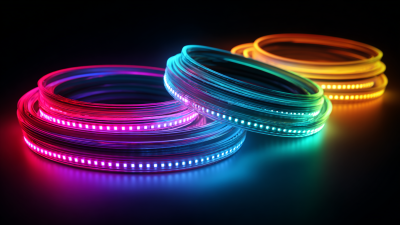
Why Choose Flexible LED Strip Lights for Global Projects?
Global lighting projects rarely follow one blueprint. A hotel lobby may need soft, warm illumination, while a retail display requires accurate color and stronger visual contrast. Flexible LED strip lights adapt to both conditions. They bend around columns, shelves, counters, and curved ceilings. Their low profile also helps designers hide the light source cleanly.
James Brodrick, a former U.S. Department of Energy Solid-State Lighting Technology Manager, stated, “The goal of solid-state lighting is to produce more light with less energy.” That principle remains practical today. Efficient strips can reduce power demand, but efficiency alone is not enough. Project teams must check lumen output, color rendering, voltage drop, heat dissipation, and driver compatibility. A bright sample can still fail after a long installation run.
Field experience reveals small details. A five-meter strip may look uniform on a workbench, yet show dimming near its far end. Aluminum profiles can improve heat management and protect the strip from physical contact. IP-rated versions suit humid areas, but an IP rating does not replace proper installation. Regional voltage standards, safety certifications, and local wiring requirements also need verification.
No product fits every market perfectly. That is the uncomfortable part. Designers may need different color temperatures, connectors, or control systems across one project. Careful testing remains essential. This guide examines why flexible LED strip lights support global applications, where they perform well, and where their limitations deserve honest attention.
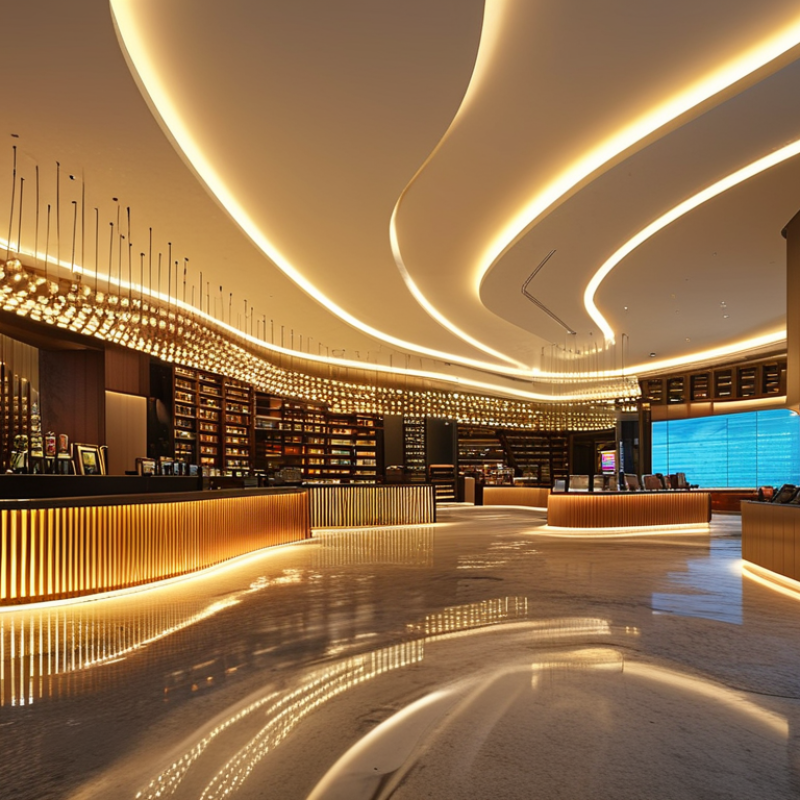
Flexible LED strip lights are narrow circuit boards carrying many light-emitting diodes. Their bendable design allows installation around curves, shelves, ceilings, and signage frames. The strip usually includes copper conductors, resistors, and adhesive backing. A low-voltage power supply delivers electricity through these conductors. Each diode changes electrical energy into visible light.
The system is simple, but sizing matters. Sections are often cut at marked points, not anywhere on the strip. A controller can adjust brightness or color through pulse-width modulation. Longer runs may show dimmer light near the far end because of voltage drop. Power injection can help, although it adds wiring and installation time. Measure the total wattage before choosing the power supply. Leave a safety margin.
Protection also affects performance. Indoor strips may suit dry ceilings, while sealed versions resist moisture around covered outdoor areas. The rating must match the actual environment, not an imagined one. In field installations, I have seen adhesive fail on dusty or textured surfaces. Cleaning and mechanical clips often provide better support. Heat is another overlooked issue. Aluminum channels can improve cooling and create a cleaner light line. A small detail, but important.
Global projects require careful attention to voltage, connectors, documentation, and local electrical requirements. Color temperature can also appear different under regional lighting conditions. Testing a sample section helps reveal uneven brightness, visible dots, or unsuitable diffusion. No design is perfect. The installation may still need adjustment after real-site testing.
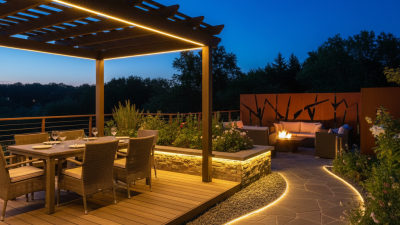
Why Choose Flexible LED Strip Lights for Global Projects?
Why Flexibility Matters in Global Project Design
Global projects rarely follow a perfect drawing. Walls shift, ceilings vary, and local contractors interpret details differently. Flexible LED strip lights accommodate curves, narrow recesses, and irregular surfaces without forcing major redesigns. This reduces installation friction across hotels, retail spaces, transport facilities, and residential developments.
Adaptability also supports energy planning. The International Energy Agency reported that lighting represents about 15% of global electricity consumption. The U.S. Department of Energy notes that LED products can use at least 75% less energy than incandescent lighting. These figures do not guarantee savings for every strip installation. Poor controls, excessive brightness, and unsuitable power supplies can erase expected benefits. That limitation deserves attention.
A flexible system can simplify regional coordination. Designers may specify consistent color temperature, voltage, ingress protection, and cutting intervals. Local teams can then adjust lengths on site while preserving the lighting concept. It is practical, but not effortless. Moisture, heat, voltage drop, and replacement access still require technical review. The International Electrotechnical Commission emphasizes safety, performance, and testing through applicable lighting standards, which should guide project specifications.
Small details matter. A concealed profile can prevent glare near a polished stone counter. A reliable connector can save hours above a finished ceiling. In my view, flexibility is valuable only when supported by accurate measurements and documented installation methods. Otherwise, it becomes another source of inconsistency. Some projects still overdesign the system. Simpler layouts may perform better.
| Design Dimension | Typical Flexible LED Strip Characteristics | Value in Global Project Design | Key Planning Consideration | Representative Data |
|---|---|---|---|---|
| Installation Geometry | Can follow curves, corners, recessed profiles, coves, furniture edges, and irregular architectural details. | Supports consistent visual concepts across projects with different building shapes and interior layouts. | Confirm whether the product bends only horizontally or also supports vertical bending. | Horizontal bend radius often specified by the product design; verify before installation. |
| Cutting and Length Adjustment | Strip sections can normally be cut at marked intervals and connected with compatible accessories. | Reduces material waste when room dimensions, display areas, or local construction details vary by country. | Cut only at marked points and maintain correct polarity after every cut. | Common cut intervals include 25 mm, 50 mm, or 100 mm, depending on circuit design. |
| Operating Voltage | Low-voltage systems are widely used for architectural, retail, hospitality, and residential lighting. | Allows safer distribution within luminaires and simplifies adaptation to different regional electrical systems when suitable power supplies are selected. | Use certified power supplies compatible with the local mains voltage and project regulations. | Common strip voltages: 12 V DC and 24 V DC. |
| Power and Voltage Drop | Long runs require correct conductor sizing, power injection, and load planning. | Flexible layouts can be divided into manageable sections for different room sizes and installation conditions. | Calculate total wattage, cable length, voltage drop, and power-supply reserve. | Typical planning reserve for a power supply: approximately 20% above calculated load. |
| Environmental Protection | Available constructions range from non-sealed indoor versions to sealed versions for humid or exposed locations. | Enables one design approach to be adapted for offices, retail spaces, hospitality areas, façades, and outdoor features. | Match the enclosure rating, connector protection, drainage, and installation method to the actual environment. | Common protection classifications include IP20 for dry interiors and IP65/IP67 for protected or wet-location applications. |
| Color Temperature | Fixed white, tunable white, RGB, and RGBW configurations are available for different design objectives. | Supports regional preferences, changing hospitality moods, retail campaigns, and different architectural materials. | Specify color temperature and control behavior in the project schedule to prevent inconsistent replacement products. | Common white-light ranges: approximately 2700 K to 6500 K. |
| Color Quality | LED strip products are available with different color-rendering performance. | Helps maintain a consistent appearance for products, artwork, finishes, food displays, and branded environments without relying on a specific brand. | Specify minimum CRI and, where relevant, R9 performance for saturated red colors. | CRI 80+ is common; CRI 90+ is often selected where color appearance is critical. |
| Lighting Uniformity | Higher LED density and suitable aluminum profiles can reduce visible dark spots and improve continuous illumination. | Creates a repeatable visual standard across different ceiling details, millwork systems, and installation lengths. | Use an appropriate LED density, diffuser, profile depth, and viewing distance. | Higher-density layouts generally provide smoother lines than widely spaced LED layouts. |
| Thermal Management | Flexible strips commonly perform more reliably when installed on an aluminum heat-dissipating profile. | Provides a repeatable installation method that can be specified across multiple climates and project locations. | Do not cover high-output strips with heat-insulating materials; provide continuous thermal contact where required. | Aluminum profiles are widely used to improve heat dissipation and mechanical protection. |
| Control Compatibility | Systems may support on/off switching, dimming, tunable white, RGB, RGBW, sensors, or building-control integration. | Allows the same lighting concept to work with different local control standards and user requirements. | Define control protocol, channel count, dimming method, addressing, and commissioning responsibility. | Common control approaches include PWM dimming, DALI, DMX, and building automation interfaces. |
| Maintenance and Replacement | Modular cut sections and accessible profiles can simplify repairs compared with replacing a complete rigid fixture. | Reduces downtime and makes maintenance more practical when local labor, spare parts, and access conditions vary. | Keep installation drawings, cut lengths, wiring diagrams, and spare sections available for each site. | Design for access and use standardized section lengths where possible. |
| Shipping and Storage | Lightweight, rollable strips can occupy less space than many rigid linear fixtures. | Improves logistics flexibility for phased international deliveries and projects with uncertain installation schedules. | Protect reels from crushing, moisture, electrostatic discharge, and excessive bending during transport. | Storage conditions should follow the product technical documentation, especially for temperature and humidity. |
| Standards and Documentation | Project specifications can define electrical, photometric, environmental, and safety requirements without naming a manufacturer. | Supports competitive procurement and easier substitution across regions while preserving the intended performance. | Request datasheets, test reports, wiring diagrams, photometric data, and applicable conformity documentation. | Specify measurable requirements such as voltage, wattage, CCT, CRI, IP rating, lifetime, and control method. |
Flexible LED strip lights adapt well to curved walls, narrow cabinets, display shelves, and uneven architectural surfaces. Their bendable construction reduces cutting and drilling during installation. A strip can follow a gentle corner without creating dark gaps. That matters.
Different environments require different protection levels. Dry indoor spaces may need a basic coating, while kitchens, bathrooms, and covered outdoor areas require stronger moisture resistance. However, water protection does not replace proper sealing. Connectors, cable entries, and power supplies still need careful protection.
Installers should also consider heat. Aluminum channels help transfer heat away from the LEDs and create a cleaner finish. In long runs, voltage drop can reduce brightness near the far end. Splitting the circuit or feeding power from both ends often improves consistency. Local electrical requirements should guide every connection.
Tips: Measure the route twice before cutting. Test a short section first. Leave service access behind panels or furniture. Clean the mounting surface carefully, because dust weakens adhesion. Use flexible connectors only where movement is expected. I have seen attractive installations fail because the backing surface was slightly oily. Small details become expensive later. Some layouts still need adjustment after testing, especially around tight bends or changing temperatures.
Flexible LED strip lights suit global projects because they adapt to different spaces, voltages, and installation methods. Their low profile fits under shelves, along curved walls, and inside narrow architectural channels. However, flexibility alone does not guarantee reliable performance.
International projects require careful checks. Confirm the input voltage before shipment, especially when sites use different electrical systems. Select an appropriate IP rating for dry rooms, kitchens, or exposed outdoor areas. CCT and CRI also matter; a 3000K strip creates warmth, while a higher CRI improves retail and hospitality displays. Thermal management is often overlooked. Aluminum channels can reduce heat and extend service life. Dimming compatibility should be tested with the planned controller, not assumed from product sheets. I have seen installations fail because connectors loosened after repeated temperature changes. Small details matter.
Tips: Request samples and test them at the actual voltage. Measure brightness after several hours, not only at startup. Check color consistency across a five-meter run. Confirm local safety requirements and documentation before ordering. Keep spare connectors on site. A perfect specification can still meet a poor installation. Photograph wiring routes and label every circuit for future maintenance. Performance may vary with mounting surfaces, so allow time for a real-site trial.
Flexible LED strip lights suit global projects because they adapt to curved shelves, signage, ceilings, and narrow display bays. Yet flexibility does not remove planning. Start with a regional load sheet. Record voltage, wattage, strip length, ambient temperature, and operating hours. A 24-volt system often reduces voltage drop across longer runs, but the final choice depends on local supply conditions and installation distance. Select color temperature carefully. Warm white can support hospitality spaces, while neutral white may improve retail visibility.
Check the environment before ordering. Dry indoor areas may need basic protection, but kitchens, façades, and humid facilities require suitable ingress protection. Confirm cutting intervals, connector types, dimming methods, and aluminum profiles with the installation team. Do not rely only on catalog images. Request samples and test brightness, color consistency, heat, and adhesive strength in the actual setting. Small differences become obvious across a long ceiling.
Deployment needs regional coordination. Provide wiring diagrams, marked cut points, spare connectors, and clear labeling in the local language. Use aluminum channels to control heat and maintain a clean line. Power supplies should remain accessible for inspection and replacement. Local electricians should verify compatibility with site requirements and applicable safety standards. A careful plan can still miss a wall texture or an unexpected temperature shift. That is why a pilot section matters. Measure it after several operating cycles, then adjust the specification before full installation.