| 1 |
LED strip type |
Select single-color, tunable white, or RGB/RGBW according to the lighting goal. |
Single-color: one fixed color; tunable white: adjustable warm-to-cool white; RGB/RGBW: color effects, with RGBW adding a dedicated white channel. |
Task lighting, ambient lighting, decorative effects, or color-changing scenes. |
The strip type determines color flexibility, white-light quality, control options, and total cost. |
| 2 |
LED package and density |
Choose an appropriate LED size and LED count per meter. |
Common density: approximately 30–60 LEDs/m; high-density versions: approximately 96–240 LEDs/m. Typical package sizes include 2835, 3528, and 5050. |
30–60 LEDs/m for general accent lighting; 96+ LEDs/m for smoother, brighter illumination. |
Higher density usually reduces visible dark spots and creates more even light, especially in aluminum profiles. |
| 3 |
Brightness |
Compare lumens per meter rather than LED count alone. |
Accent lighting: about 300–800 lm/m; general cove lighting: about 800–1,500 lm/m; task lighting: about 1,500–2,500+ lm/m. |
Use lower output for decorative glow and higher output for work surfaces or primary illumination. |
Lumens measure visible light output. Actual brightness also depends on diffuser, mounting distance, and surface color. |
| 4 |
Color temperature |
Match the Kelvin rating to the atmosphere and application. |
2,200–3,000 K: warm white; 3,500–4,100 K: neutral white; 5,000–6,500 K: cool or daylight white. |
Warm white for bedrooms and living areas; neutral white for kitchens and offices; daylight white for detailed work. |
Lower Kelvin values appear warmer and more relaxing, while higher values appear cooler and more energetic. |
| 5 |
Color rendering |
Choose a suitable color rendering index, or CRI. |
CRI 80+: acceptable for general areas; CRI 90+: preferred for kitchens, retail displays, artwork, and photography. |
Use high-CRI strips where accurate appearance of food, clothing, finishes, or skin tones is important. |
A higher CRI generally makes illuminated colors appear more natural and accurate. |
| 6 |
Voltage and power |
Match the strip voltage with the correct power supply and allow reserve capacity. |
Common strip voltages: 5 V, 12 V, and 24 V. Select a power supply rated at least 20% above calculated load. |
24 V is often preferable for longer runs because it can reduce voltage-drop problems. |
Incorrect voltage can cause malfunction or damage. Extra capacity helps prevent overheating and unstable operation. |
| 7 |
Cutting and run length |
Check the marked cutting interval and maximum continuous run before installation. |
Typical cut intervals: 25–100 mm, depending on voltage and design. Long runs may require parallel power injection. |
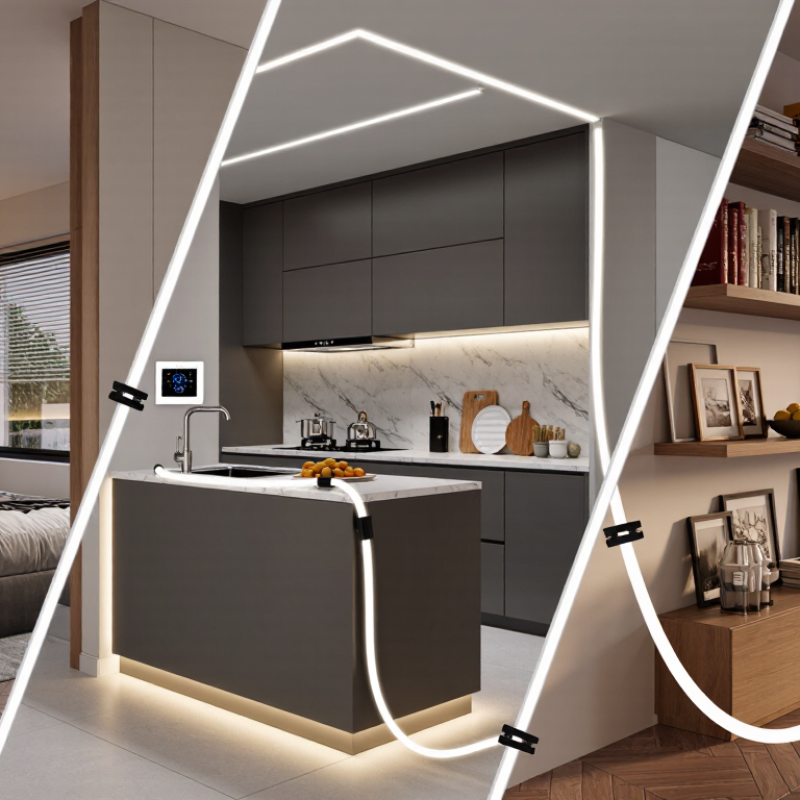
Custom cabinet, shelf, display, and cove-lighting projects. |
Cutting outside the marked points can damage a section, while long runs may become dimmer toward the far end. |
| 8 |
Water and dust resistance |
Select the ingress protection rating based on the installation environment. |
IP20: dry indoor areas; IP44: limited splash protection; IP65: dust-tight and water-jet resistant; IP67: temporary immersion protection when properly sealed. |
Dry rooms, kitchens, covered outdoor areas, or exposed locations respectively. |
A higher IP rating can improve protection, but coated strips may have different heat dissipation and flexibility. |
| 9 |
Heat management |
Install medium- and high-output strips on an aluminum channel or heat-conductive surface. |
Use an aluminum profile with a diffuser for continuous runs, high brightness, or enclosed installations. |
Cove lighting, kitchen worktops, display cases, and long daily operating periods. |
Improved heat dissipation can help maintain light output and extend LED service life. |
| 10 |
Control and installation accessories |
Confirm compatibility with dimmers, remote controls, sensors, smart systems, connectors, and mounting channels. |
Single-color strips typically require a compatible dimmer; RGB and RGBW strips require matching controllers and wiring. |
Projects needing schedules, motion activation, brightness adjustment, or color scenes. |
Correct accessories improve safety, usability, appearance, and long-term installation reliability. |