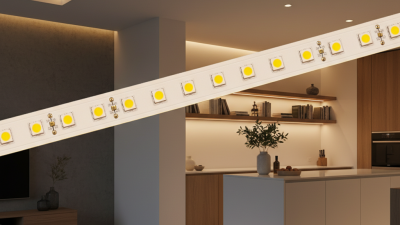
Choosing a reliable COB LED strip manufacturer matters more than comparing factory prices.
Global buyers need consistent brightness, stable color temperature, accurate cutting, and dependable technical support. A professional supplier should explain chip density, PCB quality, adhesive performance, voltage options, IP ratings, and thermal management clearly. These details affect installation results. They also affect long-term maintenance costs.
Dr. Roland Haitz, a respected LED industry researcher, once said, “The future of the LED is so bright, it is going to replace all conventional light sources.” His statement reflects the direction of modern lighting, including flexible cob led strip products. However, brightness alone does not prove quality. A strip can look powerful in a showroom and still fail under heat, weak solder joints, or poor encapsulation.
Real experience changes the evaluation process. Buyers should request test samples, photometric data, aging reports, and production photographs. They should inspect the strip under bends and around aluminum profiles. Small details matter.
Not every factory deserves global trust.
A dependable manufacturer usually supports controlled production, traceable materials, stable binning, and documented quality inspections. Certifications can help, but certificates require verification. This is where many evaluations become incomplete. I would not judge a supplier from a polished website alone.
This guide examines how international buyers can identify a suitable China-based COB LED strip manufacturer. It considers product performance, customization capability, communication, lead times, packaging, and after-sales responsibility. The best choice may not be the cheapest quotation. It is the supplier that performs consistently after installation.
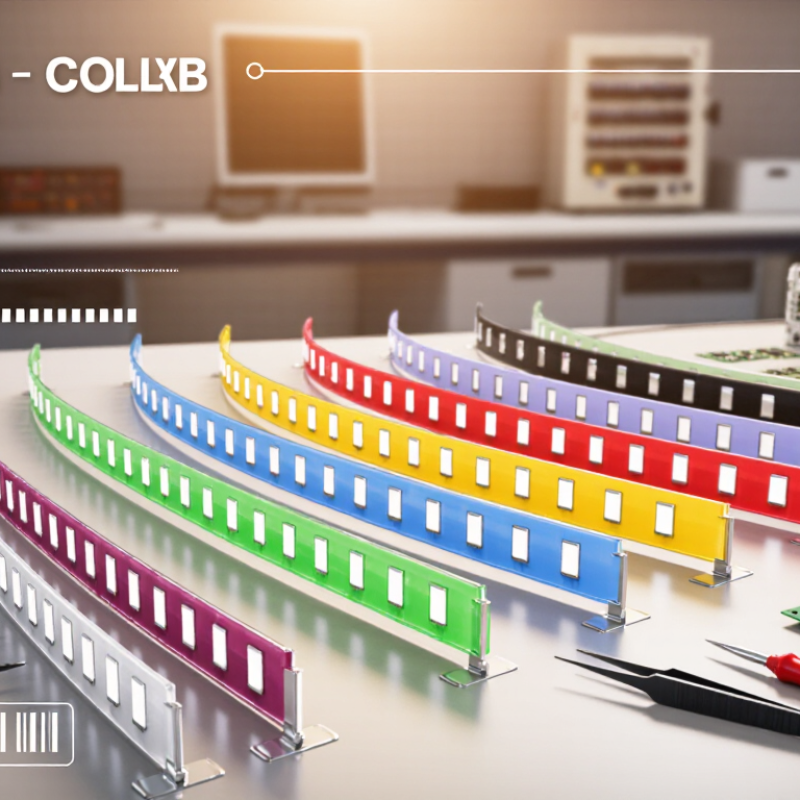
COB LED strip lighting means “chip on board.” Many LED chips sit directly on a flexible circuit board. A continuous phosphor layer covers them. This design creates a smooth, dot-free light line, even in shallow aluminum channels. Traditional strips often show dark gaps between individual packages. COB strips reduce that visual break.
The International Energy Agency reports that lighting uses roughly 15% of global electricity. The U.S. Department of Energy’s Solid-State Lighting reports identify efficacy, color quality, and thermal control as continuing industry priorities. COB technology can support high uniformity and efficient operation, but it is not automatically better. Heat still travels through the board, adhesive, and profile. Poor thermal design may shorten life or shift color. Check CRI, CCT, wattage per meter, cut intervals, bending direction, and operating temperature. A high CRI rating matters in retail, hospitality, and residential spaces.
Tips: Ask for LM-80 or equivalent test evidence, photometric files, and a clear warranty. Test a sample at full brightness for several hours. Inspect color consistency at the strip’s beginning, middle, and end. IP ratings describe water and dust protection, not complete installation safety. This detail is often misunderstood. For global buyers, confirm voltage compatibility, connector standards, labeling, and independent quality inspection before ordering. Even experienced buyers can overlook voltage drop on long runs.
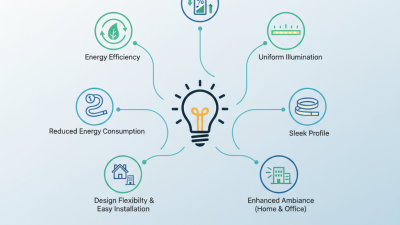
COB LED strip lighting uses LED chips mounted directly on a flexible circuit board. A continuous phosphor coating blends the light from individual chips, producing a smooth, dot-free line of illumination.
How to read the chart: Conventional SMD strips commonly use 30–120 LEDs per metre, while COB strips integrate hundreds of smaller LED chips per metre. The higher chip density helps create a more continuous light line with fewer visible hotspots, making COB technology suitable for coves, cabinets, displays and other applications requiring uniform illumination.
COB LED strips begin with a lighting target: output, color temperature, power, and installation length. Engineers arrange many small LED chips closely on a circuit board, then cover them with phosphor-coated silicone. This creates a continuous-looking line of light, though color consistency still depends on chip selection and phosphor control. Small differences show.
The flexible board usually uses copper traces to carry current and spread heat. Designers choose trace width, adhesive, and cutting intervals around the strip’s voltage and intended use. Heat matters. A narrow profile can look elegant, but it may shed heat poorly when installed in a sealed channel. The U.S. Department of Energy’s Energy Saver guidance reports that LEDs use at least 75% less energy than incandescent lighting and can last up to 25 times longer; those benefits still depend on suitable thermal design and operating conditions.
During production, technicians inspect solder joints, measure electrical load, and check light output and color across sample sections. They may also test bending and adhesion, since a strip can pass an electrical check yet fail during installation. Not every factory checks the same way. Buyers should request test records, a clear specification sheet, and confirmation of cut length, voltage, and color tolerance before ordering.
The table below outlines common COB LED strip design and production practices. Specifications vary by product design, application, and applicable standards; figures shown as typical ranges are not universal requirements.
| Design or Manufacturing Dimension | Typical Specification or Practice | How It Affects the Strip | What Buyers Can Verify |
|---|---|---|---|
| LED and optical layout | Multiple LED chips are mounted closely along a flexible printed circuit board (FPCB) and covered with a continuous phosphor-containing encapsulant. | The closely spaced light sources and continuous coating create a more uniform-looking line of light than widely spaced individual packages, particularly when used with suitable optics. | Request a sample and assess illumination uniformity in the intended installation, including the planned diffuser or channel. |
| Color temperature and color quality | Common white-light options include warm, neutral, and cool white CCTs. CRI options such as 80+ and 90+ are available on many product ranges, subject to design. | CCT determines the perceived warmth of white light; CRI indicates how accurately colors are rendered compared with a reference source. | Ask for measured CCT and CRI data for the specific product and confirm the stated test conditions and tolerances. |
| Flexible circuit board | LED chips and electrical components are assembled on a flexible PCB. Copper weight, board width, and circuit layout are selected according to current, heat, and mechanical requirements. | Board construction influences voltage drop, current capacity, flexibility, and thermal performance. The same LED layout can perform differently on different PCB designs. | Confirm PCB dimensions, copper specification, polarity markings, and installation bend limitations on the product datasheet. |
| Operating voltage and circuit design | 12 V and 24 V DC are common low-voltage strip configurations. The driver or power supply must match the product’s rated voltage and load. | Voltage, strip length, and circuit layout affect current and voltage drop. Longer runs may need power feed points planned according to the product design. | Check rated voltage, watts per metre, maximum recommended run length, and the manufacturer’s wiring guidance. |
| Cutting and connection points | Cutting marks are placed at intervals determined by the electrical circuit and PCB layout. Intervals differ between models. | Cutting away from designated marks can damage the circuit or leave a segment that cannot be connected as intended. | Verify cut-point spacing, polarity, connector compatibility, and whether cut ends require resealing for protected versions. |
| Chip placement and assembly | Production commonly includes PCB preparation, chip placement or bonding, electrical connections, and inspection. The exact assembly route depends on chip and product design. | Placement accuracy and reliable electrical connections support consistent operation and reduce the risk of open circuits or uneven output. | Ask about in-process inspection, traceability, and electrical checks on finished reels or defined sample quantities. |
| Phosphor encapsulation | A phosphor-containing encapsulant is applied over the chip array and cured using a controlled process. Formulation and coating geometry affect optical results. | Consistent coating helps achieve the intended color and appearance along the strip. Process variation can contribute to visible color differences. | Request color-consistency specifications and samples from more than one production reel when color matching is critical. |
| Thermal and electrical testing | Finished products can be checked for electrical continuity, input power, light output, color characteristics, and operation under specified conditions. | Testing helps identify assembly defects and confirms performance against the agreed product specification. | Request a test report tied to the exact model and clarify sample size, test conditions, and acceptance criteria. |
| Protection and installation environment | Products may be supplied as exposed strips or with coatings, sleeves, or other protection. The resulting ingress-protection rating depends on the complete construction and testing. | Protection affects suitability for dust, moisture, cleaning, and outdoor exposure. A coating alone does not establish a specific IP rating. | Match the documented IP rating to the installation environment and check whether connectors, cut ends, and joints retain the required protection. |
| Adhesive backing and mounting | Many flexible strips use pressure-sensitive adhesive, but adhesion depends on the backing, mounting surface, cleanliness, temperature, and installation method. | Correct surface preparation and heat management help the strip remain securely mounted during operation. | Confirm the adhesive type, recommended surface preparation, operating conditions, and whether an aluminium profile is advised. |
| Packaging and export documentation | Reels and cartons are commonly labeled with product identification and electrical information. Documentation requirements depend on the destination market and sales arrangement. | Clear labeling supports receiving, installation, and product traceability. Import requirements differ by country and product configuration. | Agree on reel length, labeling, packing method, datasheet, test documents, and any destination-market compliance documentation before shipment. |
A strong COB LED strip manufacturer does more than place dense LED chips on a flexible board. The phosphor coating should appear even, with no visible dark dots when the strip is lit. Ask for samples and inspect them at the intended brightness, not only in a showroom. Small details matter.
Consistency between production batches is just as important. Reliable manufacturers document color temperature, voltage, power consumption, and binning tolerances. They should also share practical test data, such as operating temperature and light output after extended use. A neat datasheet helps, but it cannot replace clear answers about how those figures were measured. If the explanation feels vague, pause.
Thermal design deserves close attention. A strip that runs hot inside an aluminum channel may lose brightness or shift color sooner than expected. Ask about copper thickness, recommended installation surfaces, and suitable power supplies. Experienced technical teams can help match strip density and output to a project, rather than simply recommending the brightest option. Even careful testing has limits; real installation conditions can differ from the lab, so a small pilot order is sensible before a larger purchase.
For global projects, evaluating a COB LED strip supplier takes more than comparing price per meter. Check the technical datasheet for wattage, voltage, color temperature, CRI, cutting intervals, and available widths. Ask how the supplier controls color consistency between production batches. A warm-white sample may look uniform on a desk but reveal uneven color beside another strip in a long ceiling channel. Test samples in the intended fixture, with the planned dimmer and power supply.
Request clear details about thermal performance, adhesive options, protection ratings, packaging, and production lead times. Ask for relevant test reports and documentation, then confirm that they match the exact product configuration you plan to order. A supplier’s response to a specific technical question can be revealing. Still, polished documents do not guarantee consistent production. No checklist catches everything. A small pilot order can expose issues with installation, brightness, or color before a larger shipment.
Tips: Compare samples under real project conditions. Record the batch details and keep a reference strip. Ask who handles quality concerns after delivery, and get the answer in writing. Small details matter.
International buyers should check whether a COB LED strip manufacturer can provide current, product-specific documents. Depending on the destination market, these may include CE or UKCA conformity information, RoHS test reports, and relevant electrical safety or electromagnetic compatibility records. Paperwork matters. Confirm that the listed model, voltage, and power supply match the items being quoted; a certificate for a similar product is not enough. Ask for proof. A document alone cannot guarantee consistent production, so request sample strips and inspect light uniformity, color consistency, solder pads, and the adhesive backing before approving a large order.
Reliable service should continue after the sample stage. Expect clear datasheets, wiring guidance, cut-length options, packaging details, and realistic lead times. Ask how production batches are identified and whether the supplier can share inspection records and warranty terms in writing. For importing, confirm carton labels and shipping documents before dispatch. Small details count: a reel label showing voltage and color temperature can prevent confusion during installation. I would not treat fast replies as proof of quality; written answers matter more. Even careful checks have limits, and specifications can change, so keep the approved sample for comparison when repeat orders arrive.