2026 Best LED Lighting Supply for Global Buyers

Global buyers entering the 2026 market need more than low prices. They need reliable led lighting supply, verified performance, and transparent manufacturing evidence. The International Energy Agency reports that lighting uses roughly 5% of global electricity, while efficient LED adoption continues to reduce energy demand. The U.S. Department of Energy also identifies solid-state lighting as a major path toward higher efficacy and longer service life.

The opportunity is substantial.

However, product selection remains uneven. A bright sample does not guarantee stable color, safe drivers, or dependable after-sales support. Buyers should examine LM-80 data, TM-21 projections, lumen maintenance, power-factor results, surge protection, and documented quality-control procedures. These details matter in a warehouse, where thousands of fixtures operate above loading bays and dusty aisles.

Nadarajah Narendran, a leading lighting researcher and director at Rensselaer Polytechnic Institute’s Lighting Research Center, has said, “LEDs are not just a replacement for conventional light sources; they are a new lighting technology.” His point still deserves attention in 2026. LEDs connect optics, electronics, controls, software, and human comfort.

Yet no supplier is perfect.

Industry forecasts sometimes use different definitions, regions, and measurement periods. That limits direct comparison. This guide therefore evaluates suppliers through practical evidence, not promotional claims. It considers product consistency, certification records, customization capability, logistics resilience, warranty clarity, and lifecycle value. For global purchasers, the best led lighting supply partner may not offer the cheapest quotation. It should offer fewer surprises after installation.
2026 Best LED Lighting Supply for Global Buyers

LED Market in 2026: Growth Rates, Energy Savings, and Global Demand

2026 Best LED Lighting Supply for Global Buyers

LED demand is entering 2026 with strong efficiency and infrastructure drivers. MarketsandMarkets projects the global LED lighting market to grow at about 11% annually through 2029. The International Energy Agency reports that lighting remains a major electricity-use category worldwide. LED upgrades can cut lighting energy use by up to 75% compared with incandescent lamps, according to the U.S. Department of Energy.

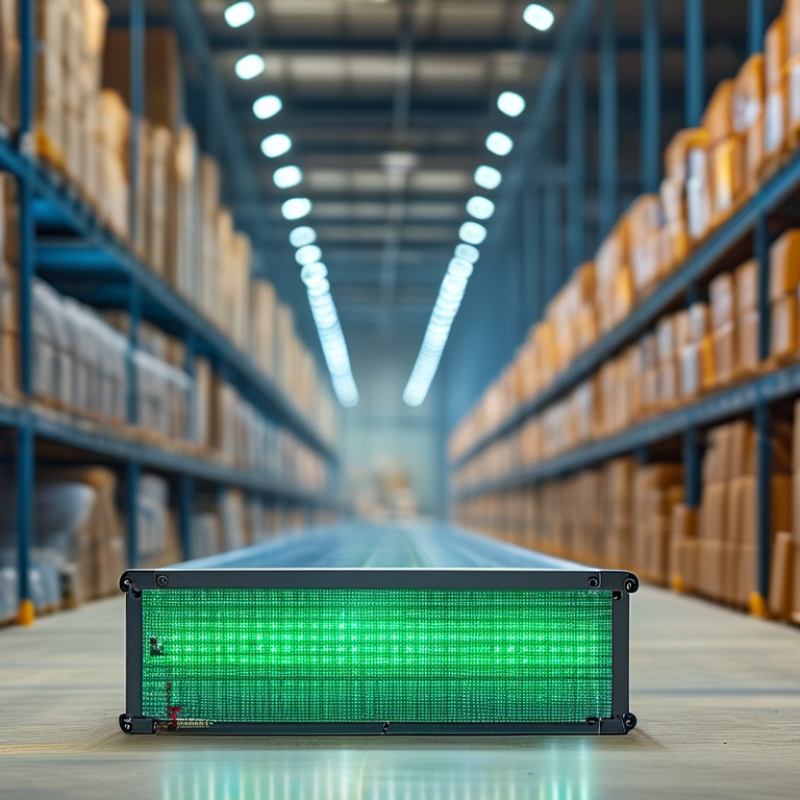
The savings become visible in real spaces. A warehouse using 100 high-bay fixtures may reduce operating demand by several kilowatts after conversion. Longer service life also lowers lift rentals, replacement labor, and disposal volume. However, suppliers should provide tested lumen output, efficacy data, color consistency, surge protection, and thermal performance. A low purchase price means little if heat damages drivers within two summers.

LED upgrades can cut lighting energy use by up to 75% compared with incandescent lamps.

Global demand is uneven. New commercial buildings favor connected controls, while factories and public facilities often prioritize reliable retrofits. The IEA’s Energy Efficiency 2024 analysis supports stronger efficiency investment, but local grid prices still shape payback periods. Forecasts are not guarantees. Some market estimates also count different product categories, making direct comparisons imperfect. Buyers should request laboratory reports, recognized safety certifications, warranty terms, and sample testing before approving large shipments. LED quality is not obvious from appearance alone.
LED Performance Basics: 150–200 lm/W Efficacy, CRI, CCT, and Lifespan

2026 Best LED Lighting Supply for Global Buyers

LED performance begins with usable light, not a headline number. High-quality products may reach 150–200 lm/W under controlled laboratory conditions. Complete fixtures often deliver less after optics, drivers, and thermal losses. Ask for test reports showing input wattage, delivered lumens, and measurement conditions. Small details matter.

CRI shows how naturally colors appear. For offices and warehouses, CRI 80 may be adequate. Retail, hospitality, and healthcare spaces often benefit from CRI 90 or higher. A red object can look dull under poor spectral quality. CCT defines the visual warmth, from approximately 2700K to 6500K. Warm light feels calm, while cooler light appears more alert. Choose based on tasks, surfaces, and local preferences.

Lifespan needs careful interpretation. A stated 50,000 or 100,000 hours usually refers to L70, not complete failure. L70 indicates when output falls to 70% of its original level. Heat, unstable voltage, dust, and poor ventilation can shorten real service life. In project checks, I compare thermal test data with the installation environment. Specifications can still mislead. Some suppliers also publish impressive chip efficacy instead of fixture efficacy. That is a weakness buyers should question. Request driver details, operating temperature ranges, warranty terms, and lumen-maintenance data before placing large orders. Testing a sample through several days and nights can reveal flicker, color shifts, or unexpected heat.

2026 Best LED Lighting Supply for Global Buyers - LED Performance Basics: 150–200 lm/W Efficacy, CRI, CCT, and Lifespan

Reference performance ranges for evaluating LED lamps and luminaires. Actual results depend on LED package, optical design, driver, thermal management, operating temperature, and test conditions.

Performance Dimension Recommended Specification Typical Reference Range What Global Buyers Should Check Application Benefit
System luminous efficacy 150–200 lm/W 120–180 lm/W for many commercial LED luminaires; 150–200 lm/W for high-efficiency products under suitable conditions Confirm whether the figure refers to the complete luminaire or only the LED package. Request LM-79 or equivalent photometric test data. Lower energy consumption for the same light output and reduced operating cost.
High-CRI performance CRI ≥80 for general use; CRI ≥90 for color-critical spaces CRI 80–95; higher CRI products commonly provide lower efficacy than standard-CRI versions Check the complete CRI value and, when color quality is important, R9 performance and the test method. More natural and accurate color appearance for retail, hospitality, healthcare, and residential environments.
Correlated color temperature (CCT) 2700–6500 K, selected by application 2700–3000 K warm white; 3500–4100 K neutral white; 5000–6500 K cool or daylight white Verify nominal CCT and color consistency, preferably with a standard deviation of color matching (SDCM) of ≤5 for general projects. Supports the desired visual atmosphere, task visibility, and architectural appearance.
Color consistency ≤5 SDCM for general projects; ≤3 SDCM for premium applications 3–7 SDCM depending on LED binning and product grade Ask for the SDCM tolerance and confirm that the tolerance applies across the delivered batch. Reduces visible color differences between fixtures installed in the same space.
Useful life rating L70 ≥50,000 hours; L80 or L90 where maintained brightness is critical Approximately 50,000–100,000 hours for quality LED systems when operated within rated conditions Check whether the rating is for the LED system or the complete luminaire, and review the reported ambient temperature and test standard. Longer service intervals, lower maintenance labor, and more predictable lifecycle costs.
Driver lifetime ≥50,000 hours at the declared case temperature Commonly 50,000–100,000 hours for properly specified drivers Review driver case-temperature limits, capacitor quality, surge protection, dimming compatibility, and replacement availability. Helps prevent premature system failure even when the LED modules remain functional.
Thermal operating condition Use within the declared ambient-temperature range Indoor products often support approximately −20°C to +40°C; outdoor products may support wider ranges Confirm lumen maintenance, rated life, and driver performance at the actual installation temperature. Improves reliability and helps preserve light output in hot or cold environments.
Power factor ≥0.90 for commercial and industrial installations 0.90–0.99 for well-designed LED drivers; residential products may vary Check power factor at the rated input voltage and load, along with total harmonic distortion where required. Supports efficient electrical infrastructure and helps meet project or utility requirements.
Surge protection At least 4 kV for many indoor products; 6–10 kV commonly specified for outdoor equipment Application-dependent; higher levels may be required in exposed or lightning-prone locations Verify whether the rating is line-to-line, line-to-ground, or both, and confirm compliance with the project specification. Reduces the risk of damage from transient voltage events.
Ingress protection IP20–IP44 indoors; IP65 or higher for exposed outdoor areas IP20 for dry interiors; IP44 for splash-prone areas; IP65–IP66 for dust and water-jet exposure Match the IP rating to dust, moisture, cleaning, and weather conditions. IP rating does not replace corrosion protection. Improves safety and durability in demanding installation environments.

Technical note: L70 indicates the time required for average light output to reach 70% of its initial value. Rated life is not the same as a warranty period. Efficacy, color quality, lifetime, and operating temperature should be evaluated together rather than as isolated specifications.

Supply Chain Structure: Chips, Drivers, Fixtures, and Regional Hubs

Global LED lighting supply is no longer a single-factory transaction. It is a linked chain of chips, drivers, fixtures, testing labs, and regional warehouses.

The U.S. Department of Energy reports that LED products can use at least 75% less energy than incandescent lamps. That advantage depends on stable component quality, not only on the finished fixture.

LED chips usually move through specialized semiconductor and packaging clusters in East Asia. Drivers add another risk. Capacitors, controllers, and protection components can extend lead times when demand changes suddenly.

The International Energy Agency’s Energy Efficiency 2024 report identifies efficient lighting as a major source of electricity savings, increasing pressure for reliable LED deployment. Buyers should check driver temperature ratings, power-factor results, surge protection, and warranty test conditions. Small details matter.

Fixtures are commonly assembled near major construction markets, while regional hubs shorten customs delays and replacement cycles. Southeast Asia supports growing assembly capacity, Europe emphasizes compliance documentation, and North America often requires localized distribution and certification records.

The World Semiconductor Trade Statistics forecast released in 2024 projected global semiconductor market growth, but expansion does not guarantee smooth lighting supply. That assumption is risky.

A cheaper fixture may hide weaker thermal design or inconsistent binning. Procurement teams should request sample testing, batch traceability, photometric files, and documented factory audits before approving volume orders.

Some buyers still focus too heavily on price. That deserves reconsideration.

Global Buyer Standards: IP65, IEC Safety, LM-80, TM-21, and DLC

In 2026, the best LED lighting supply begins with verifiable standards, not attractive catalog images. Global buyers should check IP65 ratings for dust protection and water jets. However, IP65 does not mean the fixture can survive submersion. Installation conditions still matter.

IEC safety documentation should identify the tested product, voltage range, and applicable requirements. Ask for reports from competent, independent laboratories. LM-80 data measures lumen maintenance for LED packages or modules under controlled conditions. TM-21 uses that data to estimate long-term lumen performance. These documents are related, but they are not interchangeable. A supplier should explain the testing clearly. Vague claims deserve caution. I have seen project delays caused by reports that covered a similar model, not the purchased one. That detail is easy to miss.

Tips: Request the full test report, not only a certificate image. Match the report number with the product label. Check whether DLC eligibility applies to your exact model and configuration. Confirm color temperature, driver type, and operating hours before ordering. Standards help, but they do not replace practical inspection. A sample may reveal glare, weak connectors, or uneven light that paperwork cannot show.

Supplier Evaluation Metrics: MOQ, 4–8 Week Lead Times, Warranty, and TCO

2026 Best LED Lighting Supply for Global Buyers

For global buyers, supplier evaluation should begin with measurable operating details, not attractive product photos. Real project experience shows that MOQ can reshape the entire purchasing plan. A low MOQ helps test lighting in one warehouse or retail area. A high MOQ may create unused inventory and tie up cash.

Lead times of four to eight weeks are common for customized LED orders. Ask whether this period includes component sourcing, production, testing, and export preparation. Request a written production schedule with inspection points. Delays often begin with unclear specifications. Small details matter, such as color temperature, dimming method, cable length, and packaging requirements.

Tips: Compare at least three written quotations. Check MOQ, sample policy, production capacity, and shipment records. Ask for test reports and references from similar projects. Keep one approved sample for comparison. It sounds basic, but buyers sometimes skip it under deadline pressure.

Warranty terms should state coverage, duration, replacement procedures, and exclusions. A five-year warranty has limited value without accessible after-sales support. Evaluate total cost of ownership, including energy use, installation labor, maintenance, spare units, and disposal. A cheaper fixture may consume more power or fail sooner. Calculate costs across five years, not only the initial invoice. My own supplier reviews have sometimes overvalued unit price. That mistake is expensive to correct later.

2026 Best LED Lighting Supply for Global Buyers

Supplier evaluation benchmark: MOQ, lead time, warranty coverage, and three-year total cost of ownership.

Lower MOQ and shorter lead times improve purchasing flexibility, while longer warranties and a lower three-year TCO index reduce lifecycle risk. The TCO index uses the standard supplier profile as a baseline of 100.

Filter By