What is the Best Commercial LED Strip Lights for Your Business?
In the rapidly evolving world of retail, choosing the right lighting is crucial. "Commercial LED strip lights are the future of illumination," says expert John Roberts, a lighting designer and consultant. His experience highlights the importance of quality and efficiency in lighting systems.
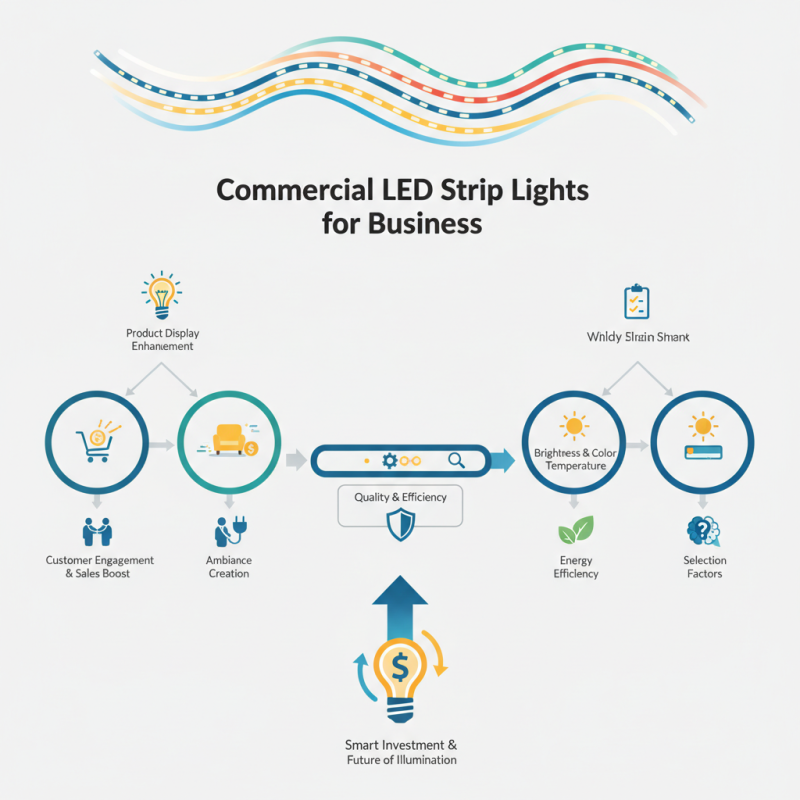
These innovative lights provide flexibility and versatility for various business environments. From enhancing product displays to creating inviting atmospheres, commercial LED strip lights can transform any space. Many businesses underestimate their impact. They fail to recognize how proper lighting can drive customer engagement and boost sales.
Roberts emphasizes, “Not all LED strip lights are created equal.” The market is flooded with options, making the selection process overwhelming. It's essential to consider factors such as brightness, color temperature, and energy efficiency. Making the right choice can feel daunting. However, investing time in research pays off, leading to a more effective lighting solution for your business. Reflecting on various options can help you avoid pitfalls and ensure a smart investment in your commercial space.
Understanding LED Strip Lights: Key Features and Benefits
LED strip lights have gained popularity in commercial settings for their versatility and efficiency. Understanding their key features is essential. First, brightness and color temperature are crucial. LED strips come in various lumens and kelvins. A well-lit space can enhance mood and productivity. Choosing the right brightness can affect the atmosphere of your business.
Another important feature is flexibility. Many LED strips are flexible and can be shaped to fit various installations. This adaptability makes them suitable for unique designs. You can illuminate corners or create interesting lighting effects. However, not every installation will be seamless. Proper planning is required to avoid unsightly gaps.
Additionally, consider the power consumption. LED strips are energy-efficient, which can lower utility costs over time. However, installation costs can be a concern. Ensure that your investment aligns with long-term financial goals. Assess the balance between upfront costs and future savings. Finding the right commercial LED strip lights involves careful consideration of these factors. They can significantly impact your business's ambiance and overall appeal.
Comparing Commercial LED Strip Lights: Types and Applications
When selecting commercial LED strip lights, various options exist depending on the application. For businesses that require high brightness, high-output LED strips are ideal. These lights produce lumens ranging from 800 to 1,200 per meter, making them suitable for warehouses and retail spaces. The flexibility of LED strips allows for creative solutions, perfect for accenting architectural details in restaurants or boutique stores.
Color temperatures also play an important role. Warm white (3000K) creates an inviting atmosphere, making it prevalent in hospitality settings. Cooler temperatures (5000K) are often used in office spaces to enhance focus and productivity. A study from the Lighting Research Center indicates that proper lighting can improve worker productivity by up to 25%.
However, not all LED strips are created equal, and some may lack longevity. A report by the Department of Energy cautions that poorly designed products could have a lifespan as short as 10,000 hours, while quality strips may last up to 50,000 hours. Businesses need to prioritize efficiency and durability. Choosing the right type of commercial LED strip lights involves analysis of both performance metrics and the specific needs of the space.
What is the Best Commercial LED Strip Lights for Your Business?
| Type |
Color Temperature |
Length |
Watts per Meter |
Applications |
| Standard LED Strip |
3000K - 6000K |
5m |
6W |
General Lighting |
| RGB LED Strip |
Adjustable |
5m |
12W |
Decorative Lighting |
| High Output LED Strip |
4000K |
5m |
24W |
Task Lighting |
| Waterproof LED Strip |
3000K - 6000K |
5m |
18W |
Outdoor Lighting |
| Tunable White LED Strip |
2700K - 6500K |
5m |
10W |
Dynamic Lighting |
Evaluating Lumens and Color Temperature for Optimal Lighting
When evaluating LED strip lights for commercial use, lumens and color temperature play crucial roles. Lumens measure the light output. High lumen counts can produce brighter lighting, which is beneficial for visibility and safety. In general, LED strip lights with over 1000 lumens per meter are ideal for retail spaces. This level ensures products are showcased well, enhancing customer experience.
Color temperature affects the atmosphere of an environment. It is measured in Kelvin (K). For instance, warm white (around 3000K) creates a cozy, inviting feel, suitable for restaurants or boutiques. Meanwhile, cool white (around 5000K) is better for workplaces like offices and warehouses, promoting alertness and efficiency. According to the Lighting Research Center, appropriate color temperatures can improve mood and productivity.
Businesses must consider these factors carefully. A poorly lit space can deter customers. Moreover, the wrong color temperature might conflict with a brand's identity. Research shows that lighting choices significantly influence
purchasing behavior. Taking the time to evaluate your needs will lead to informed decisions that can enhance both customer satisfaction and employee performance.
Energy Efficiency Metrics: Cost Savings with LED Technology
When it comes to energy efficiency, commercial LED strip lights stand out significantly. According to a report from the U.S. Department of Energy, LEDs use at least 75% less energy than incandescent lighting. This substantial reduction translates into considerable cost savings for businesses. For example, a retail operation that switches to LED strip lights can save around $2,000 annually on energy bills.
Beyond just energy savings, LED lights have a longer lifespan. They can last up to 25,000 hours, compared to 1,000 hours for traditional bulbs. This longevity means fewer replacements and lower maintenance costs. Businesses can avoid frequent bulb changes, thus saving both time and money. A study by the Lighting Research Center indicates that switching to LED can lead to savings of over 60% in overall lighting costs.
However, transitioning to LED technology does come with initial expenses. The upfront cost can be a barrier for some businesses. Despite the long-term savings, companies must weigh installation costs against future benefits. An analysis by Electrical Contractor found that those who plan carefully can recoup their investment in as little as 3 years. Understanding these metrics helps businesses make informed decisions on lighting that align with their energy goals.
Installation and Maintenance Considerations for LED Strip Lights
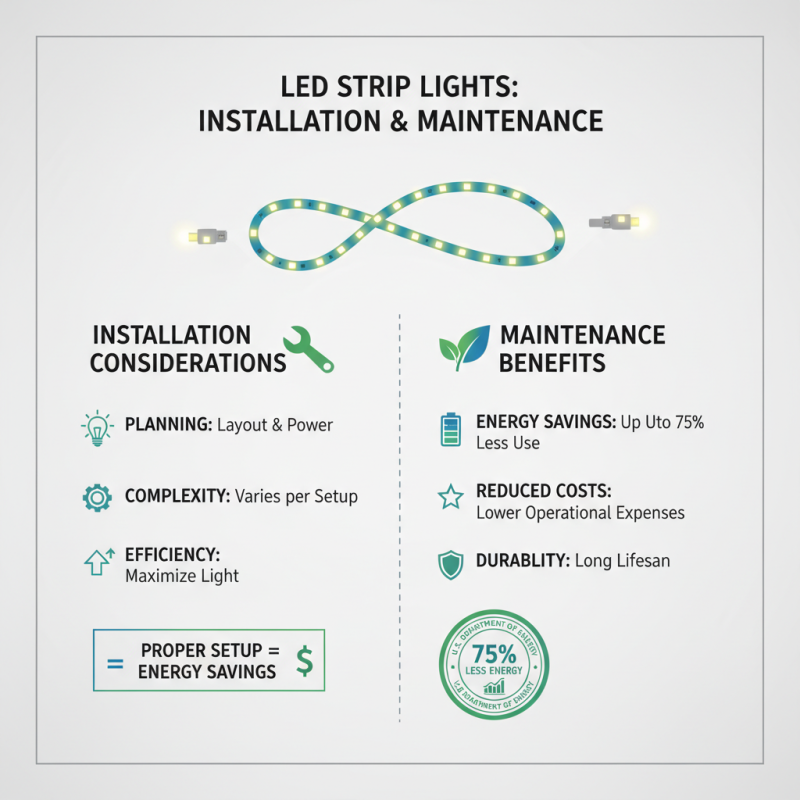
When considering LED strip lights for your business, several installation and maintenance factors are crucial. The installation process can vary based on the intricacy of your setup. Proper planning is essential to maximize efficiency and light distribution. According to a recent report by the U.S. Department of Energy, LED lighting can use up to 75% less energy than traditional lighting. This can significantly reduce operational costs, but only if the lights are installed correctly.
Mounting surfaces should be clean and dry. This ensures optimal adhesion and longevity of the product. Moreover, it's important to account for the heat generated by LEDs. Excessive heat can shorten the lifespan of your lights. Overheating might lead to flickering or even failure, which is a concern noted in multiple industry studies. Regular inspection is key. Check for any signs of damage or wear. Although many LED strips have a long lifespan, regular maintenance can prevent unexpected issues.
Another critical aspect is the choice of power supply. Inadequate power sources can result in uneven lighting or voltage fluctuations. Selecting high-quality components will ensure reliability and performance. While LED strips can provide bright and vibrant illumination, they require proper care. Ignoring maintenance can lead to decreased functionality over time.