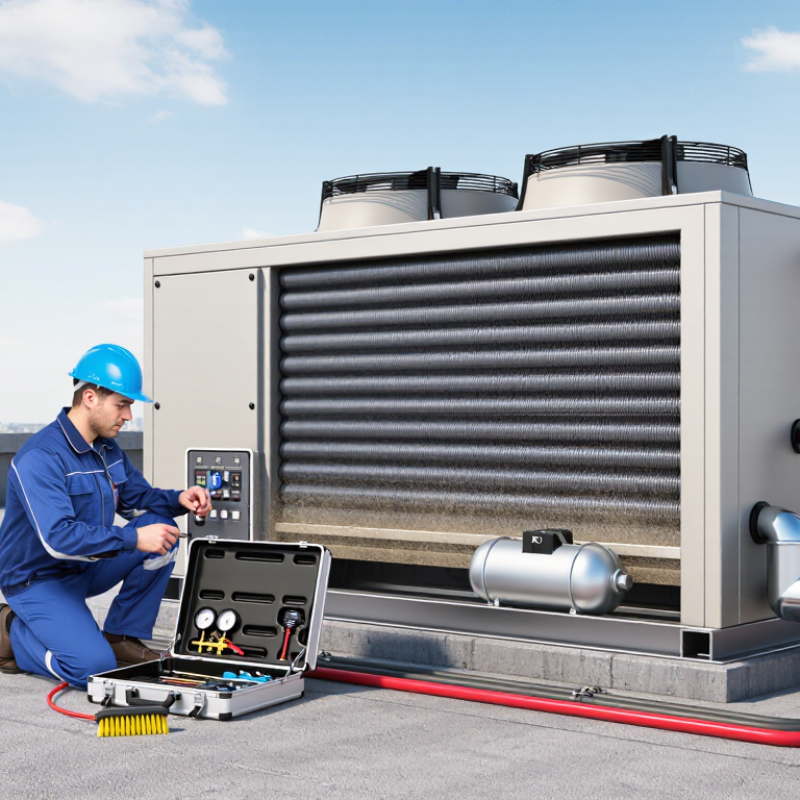
2026 Best Refrigeration Condensing Unit Buying Guide

Choosing a Refrigeration Condensing Unit in 2026 requires more than comparing horsepower and purchase prices. A reliable selection must match the evaporator, refrigerant, ambient temperature, voltage, airflow, and expected load. One mismatch can create short cycling, unstable suction pressure, excess noise, or premature compressor wear.

Refrigeration engineer and ASHRAE Fellow Dr. Predrag S. Hrnjak has emphasized, “A refrigeration system must be evaluated as a system, not as isolated components.” That principle guides this 2026 Best Refrigeration Condensing Unit Buying Guide. It reflects practical service experience, not just catalog specifications. The guide examines compressor technology, condenser design, refrigerant compatibility, energy performance, controls, sound levels, maintenance access, and total operating cost.

Look closely at the installation site. A dusty condenser coil behind a busy restaurant can lose performance quickly. A rooftop unit may face higher summer condensing temperatures than laboratory testing suggests. Small details matter.

So does documentation.

Manufacturers should provide capacity tables at realistic conditions. Check published data carefully. Marketing language can hide important limitations. A unit rated for low temperature may perform poorly during pull-down or defrost recovery. Another model may offer excellent efficiency but lack local service support.

This guide also recognizes an uncomfortable truth: the cheapest unit is rarely the cheapest system. Installation quality, coil cleaning, electrical stability, and correct control settings influence results. Some choices remain imperfect. That is why every recommendation should be reviewed against the actual room volume, product load, climate, and maintenance plan before purchase.

2026 Best Refrigeration Condensing Unit Buying Guide

What Is a Refrigeration Condensing Unit?

A refrigeration condensing unit is the outdoor part of a refrigeration system. It removes heat from the refrigerant and releases that heat into the surrounding air. Its main components usually include a compressor, condenser coil, fan motor, controls, and sometimes a liquid receiver. The unit connects to an evaporator inside a cooler, freezer, or display case.

The compressor receives low-pressure refrigerant vapor and raises its pressure. The hot vapor then moves through the condenser coil, where airflow helps it become a liquid. That liquid travels through the expansion device and evaporator. This cycle keeps stored products cold. In practice, choosing a unit is not only about horsepower. Room temperature, evaporator size, refrigerant type, voltage, noise, and expected load all matter. A quick estimate can be wrong.

Tips: Check the required cooling capacity at the actual design temperature, not a convenient catalog rating. Leave enough space around the condenser for airflow and cleaning. Confirm electrical requirements before installation. Inspect oil stains, unusual vibration, and coil blockage during routine service. Small oversights become expensive.

For 2026 purchasing decisions, review performance data under realistic conditions. A unit rated for mild weather may struggle beside a hot loading door. Energy efficiency also deserves attention, but the lowest purchase price may not provide the lowest operating cost. Ask for service documentation, safety controls, and compatible replacement parts. Reliable records matter when temperatures rise unexpectedly.

How Refrigeration Condensing Units Work

2026 Best Refrigeration Condensing Unit Buying Guide

How Refrigeration Condensing Units Work

A refrigeration condensing unit drives the heat-removal cycle. It usually includes a compressor, condenser, receiver, and controls. The compressor draws cool, low-pressure vapor from the evaporator. It then compresses that vapor into a hot, high-pressure gas. This pressure change makes heat rejection possible. The process sounds simple.

Inside the condenser, outdoor air or cooling water removes heat from the refrigerant. The vapor changes into a high-pressure liquid. That liquid moves through a metering device, where its pressure drops sharply. The colder refrigerant then enters the evaporator. There, it absorbs heat from a storage room, display case, or process area. The refrigerant becomes vapor again and returns to the compressor.

Buying decisions should follow the actual cooling load, not a rough room-size guess. Check product capacity at the required evaporating temperature and design ambient temperature. Refrigerant compatibility, voltage, airflow, noise, and service access also deserve attention. An oversized unit may short-cycle and control humidity poorly. An undersized unit may run continuously. Both conditions waste energy and increase wear. Field technicians often find that dirty coils and blocked airflow reduce performance faster than expected. Small errors matter. A commissioning check should confirm suction pressure, discharge pressure, superheat, subcooling, and electrical readings. Real installations are less tidy than diagrams. Condensation, vibration, and seasonal heat can expose weak assumptions.

Key Types and Applications of Condensing Units

2026 Best Refrigeration Condensing Unit Buying Guide

Key Types and Applications of Condensing Units

Air-cooled condensing units are common in small shops, restaurants, and walk-in coolers. They reject heat through finned coils and moving air. Installation is usually simpler, especially where water access is limited. However, dusty surroundings can block coil airflow and raise discharge pressure. Regular cleaning matters.

Water-cooled units suit supermarkets, food plants, and buildings with reliable cooling-water systems. They operate steadily in hot weather, but pumps, filters, and water treatment add maintenance work. Evaporative condensing units can reduce condensing temperatures in dry climates. Their performance depends on water quality and local humidity. They are not automatically the best choice.

Application details should guide the purchase. A frozen-food room needs lower suction temperatures than a beverage cooler. A bakery may need strong pull-down capacity after frequent door openings. For process cooling, stable temperature control can matter more than peak capacity. Match the unit with the refrigerant, compressor range, voltage, ambient temperature, and required load.

Small errors become expensive.

Field selection also reveals a common weakness: buyers often compare capacity only. Noise, service clearance, corrosion resistance, controls, and standby planning deserve equal attention. Oversizing may cause short cycling, while undersizing can leave products warm. Load calculations are useful, but real door traffic and seasonal heat may differ. Leave room for review before committing.

How to Select the Right Condensing Unit in 2026

Selecting a condensing unit in 2026 starts with the load, not the catalogue. Measure product temperatures, door openings, defrost cycles, and summer ambient conditions. A frozen-food room at -25°C needs a different evaporating temperature than a +2°C dairy room. Use design software or a qualified engineer. Do not size by horsepower alone. The International Energy Agency’s “The Future of Cooling” report projects global cooling demand could exceed 6,200 TWh annually by 2050.

Compare capacity at actual SST and ambient, not only nominal ratings. Check COP, part-load control, oil return, receiver volume, and fan modulation. For rooftop installation, test a 38°C or 43°C ambient scenario. The United Nations Environment Programme’s 2023 Cooling Emissions and Policy Synthesis Report states that cooling demand could more than triple by 2050 from 2016 levels. Select a refrigerant permitted in your market, with manageable global warming potential and available service expertise. Confirm electrical compatibility. Local rules can change.

During commissioning, record suction pressure, discharge pressure, superheat, subcooling, amperage, and room pull-down time. These readings expose poor airflow or an undersized condenser quickly. Leave clear access around filters, controls, and service valves. A perfect selection is rare. I sometimes prefer a modest capacity margin, but excessive oversizing can increase short cycling and waste energy. Review service logs after the first hot season. That step is often missed.

2026 Best Refrigeration Condensing Unit Buying Guide - How to Select the Right Condensing Unit in 2026

Technical comparison and selection reference for commercial and light-industrial refrigeration condensing units
Selection Category Typical Requirement Recommended Unit Configuration Common Refrigerant Options Typical Operating Range Key Efficiency Considerations Important Installation Requirements 2026 Selection Guidance
Medium-Temperature Cold Room Food, dairy, beverages and produce stored above freezing Air-cooled condensing unit with scroll or reciprocating compressor; receiver and filter-drier sized for the system R-448A, R-449A, R-454C or R-290, subject to local codes and equipment approval Approximately −5°C to +5°C evaporating temperature; commonly 0°C to 5°C room temperature Use floating head-pressure control, EC condenser fans and correctly sized expansion control to reduce seasonal energy use Provide adequate airflow, service clearance, condensate management and protection from dirt or corrosive atmospheres Best general-purpose choice
Low-Temperature Freezer Frozen food, ice cream and products requiring temperatures below 0°C Low-temperature reciprocating or scroll unit with crankcase heater, liquid receiver and suction accumulator where required R-448A, R-449A, R-449B, R-454C or R-290, depending on charge limits and regulations Approximately −35°C to −20°C evaporating temperature; commonly −25°C to −18°C room temperature Check compressor envelope, discharge temperature, defrost load and the system coefficient of performance at the design ambient condition Insulate suction lines, install appropriate oil-return piping and provide reliable electric, hot-gas or off-cycle defrost control Prioritize low-temperature ratings
Reach-In or Display Case Retail cabinets, small refrigerated displays and compact food-service equipment Compact air-cooled unit, often with a hermetic compressor and integrated controls R-290 or R-600a for approved self-contained systems; other refrigerants may be used in remote systems Usually medium temperature, approximately −10°C to −5°C evaporating temperature Small refrigerant charge, high-efficiency compressor, electronically commutated fans and good door or case sealing are significant Confirm flammable-refrigerant requirements, electrical classification, ventilation and maximum allowable charge before installation Efficient for compact systems
Walk-In Cooler Moderate-volume storage with frequent door openings and variable product load Remote air-cooled condensing unit with receiver, liquid-line solenoid and pump-down control R-448A, R-449A, R-454C or R-290 where permitted and properly engineered Approximately −10°C to −5°C evaporating temperature; typical room temperature 0°C to 5°C Size for pull-down load, infiltration and product load rather than only the steady-state heat load Use insulated piping, door heaters where necessary, pressure controls and adequate condenser ventilation Select for peak load
Walk-In Freezer Frozen storage with high infiltration during loading and unloading Low-temperature condensing unit with receiver, suction accumulator, crankcase heater and defrost controls R-448A, R-449A, R-454C or R-290, based on local safety and charge requirements Approximately −30°C to −20°C evaporating temperature; typical room temperature −25°C to −18°C Consider defrost energy, fan cycling, compressor capacity reduction at low ambient and liquid return protection Install heated drain lines, insulated suction piping, freezer door heaters and properly coordinated low-pressure controls Requires careful system design
CO₂ Transcritical System Supermarkets, distribution centers and sites seeking very low-GWP refrigerant options High-pressure CO₂ rack or dedicated condensing arrangement with gas cooler, flash-gas management and electronic controls R-744 (carbon dioxide), ASHRAE safety class A1 High-side pressure is controlled rather than condensed in the conventional way; operating pressures are substantially higher than HFC or hydrocarbon systems Gas-cooler control, parallel compression, ejectors and heat reclaim can improve performance depending on climate and load profile All components must be rated for CO₂ pressure; install pressure-relief protection, leak detection where required and trained service personnel Strong low-GWP option
Hydrocarbon Condensing Unit Small-capacity commercial refrigeration with a focus on low environmental impact Factory-approved R-290 or R-600a unit with sealed electrical components and limited refrigerant charge R-290 (propane), ASHRAE safety class A3; R-600a (isobutane), ASHRAE safety class A3 Application-dependent; commonly medium-temperature or compact freezer duty Hydrocarbons have very low global warming potential and favorable thermodynamic performance, but charge size and safety design are critical Use only approved equipment; control ignition sources, follow ventilation rules and observe applicable flammable-refrigerant standards Use only with qualified design
Warm or Hot Ambient Location Outdoor installation in climates with high summer design temperatures High-ambient-rated air-cooled unit with oversized condenser, head-pressure control and suitable motor protection Refrigerant must match the approved compressor and system design; lower-GWP alternatives require compatibility verification Design ambient may reach approximately 40°C to 46°C, depending on the project location and code basis Evaluate capacity at the actual design ambient, not only at nominal catalog conditions; condenser cleanliness has a major impact Provide shade without restricting airflow, maintain coil clearance and protect controls from weather and corrosion Verify high-ambient capacity
Noise-Sensitive Installation Restaurants, residential-adjacent properties, hospitals and urban retail sites Low-noise scroll or reciprocating unit with variable-speed condenser fan and acoustic enclosure where appropriate Refrigerant selection depends on capacity, safety classification, regulation and manufacturer approval Application-dependent; select based on required evaporating and condensing temperatures Variable-speed operation, vibration isolation and nighttime fan control can reduce sound and energy consumption Check sound-pressure data at the property boundary, use flexible connections and avoid transmitting vibration through building structures Specify sound performance
Variable-Load Facility Multiple rooms or cases with substantial changes in demand throughout the day Variable-capacity, digital-scroll, inverter or multi-compressor arrangement with electronic system controls Use a refrigerant approved for the compressor, piping, controls and local regulations Multiple evaporating temperatures may require separate circuits, suction groups or a rack arrangement Capacity modulation, suction-pressure optimization, floating condensing pressure and demand-based fan control improve part-load performance Provide oil management, control coordination, proper sensor placement and commissioning under both minimum and peak load Best for changing demand
Corrosive or Dusty Environment Coastal areas, food-processing sites, agricultural facilities and industrial locations Heavy-duty air-cooled condenser with protective coating, corrosion-resistant fasteners and accessible coil design System-specific; select a refrigerant compatible with the approved compressor and materials Application-dependent, with capacity derating evaluated for fouling and restricted airflow Coil protection and regular cleaning help preserve heat transfer and prevent increased condensing pressure Use suitable coil coatings, install filtration or guards where appropriate and schedule inspection based on site contamination Specify environmental protection

Note: Operating temperatures and refrigerant examples are typical engineering reference values, not universal ratings. Final selection must be based on the required refrigeration capacity, evaporating temperature, design ambient, refrigerant charge, pressure rating, local regulations, safety standards and the approved compressor operating envelope.

Installation, Maintenance, Efficiency, and Safety Considerations

2026 Best Refrigeration Condensing Unit Buying Guide

Selecting a condensing unit starts with the room, load, and operating temperature. Measure door openings, airflow paths, and available service space before ordering. In field installations, drawings often miss a low ceiling or crowded pipe route. Leave clear access around electrical panels and service valves. The unit should stand level on a stable, vibration-resistant base. Incorrect sizing wastes energy and may shorten compressor life. I have seen oversized systems cycle too often in lightly loaded rooms.

Maintenance directly affects efficiency and safety. Clean condenser coils regularly, especially near dust, grease, or vehicle traffic. Check refrigerant lines for abrasion, unusual frost, and oil marks. Inspect electrical terminals for heat damage, loose connections, and moisture. Technicians should verify pressure readings with calibrated instruments and follow approved procedures. Never bypass protective controls. A quiet fan is not always a healthy fan. Small bearing noise can become an expensive failure. Energy performance also depends on defrost settings, insulation, airflow, and correct refrigerant charge. My own checklist has improved over time, but it still needs adjustment for harsh sites.

Tips: Record operating pressures and temperatures during each visit. Photograph damaged insulation before repairs. Keep condenser air discharge away from walls and exhaust outlets. Use lockout procedures before service. If readings conflict, stop and investigate rather than guessing. Safety deserves more time.

Filter By